2.9 million vacant homes: why is there still a housing shortage?
The latest Insee review counts 2.9 million vacant homes in France excluding Mayotte. This figure is not a stock that is immediately available. Location, works, inheritances and length of vacancy help explain the paradox and the options for bringing homes back to market.

Gaston michelin
Agent immobilier
How do we explain the difficulty of finding a home when several million dwellings are unoccupied? The question regularly comes up in public debate. It seems to call for a simple answer: it would be enough to put these properties back on the market. Reality is more varied. An apartment between two tenants, a house in probate and a badly deteriorated building are not the same reserves of housing. To act usefully, you must identify the nature of the vacancy and match each property to the needs of the area.
The number of vacant homes must be interpreted correctly
In its 30 September release, Insee estimates the French housing stock excluding Mayotte at 38.6 million homes at 1 January 2026. Of these, 2.9 million are vacant, or 7.6%. This share has fallen since 2019, when it stood at 8.1%. Second homes and occasional homes are counted separately. [1]
The figure therefore does not mean that 2.9 million extra homes could immediately house new residents. It groups together different situations and durations. Part of vacancy goes with the normal working of the market: moves, short works, marketing or a change of occupant.
This distinction is essential to avoid a wrong diagnosis. Vacancy can fall nationally while access to housing remains difficult in certain cities. The condition of the stock, its distribution and households’ needs must be observed at the same time as the total.
Temporary vacancy and lasting vacancy
The public LOVAC database distinguishes short-term vacancy, known as frictional, from long-term vacancy, known as structural. Its use is aimed in particular at identifying private homes unoccupied for more than two years and allowing local authorities to contact their owners. It cross-references several tax and land sources. [2]
Temporary vacancy may be justified by refurbishment between two lettings or a sale in progress. Reducing it often depends on preparing the file, positioning the price properly and coordinating the work. A few weeks saved can already improve the result for the owner.
Long-term vacancy calls for a deeper analysis. The property may be technically hard to live in, poorly suited to demand, held by several people or blocked by an undecided project. In these cases, publishing an advertisement does not resolve the cause of the vacancy.
The empty home is not always where it is needed
Households look for a combination of size, budget, transport and services. A home available in an area where demand is weak does not automatically replace an apartment close to an employment area. Moving sometimes means changing job, school or family arrangements.
Insee observes slightly higher vacancy outside urban units (7.9%) than in Paris (7.3%) or in urban units of more than 100,000 inhabitants (7.4%): the gap remains small. This geography invites housing policies to be brought closer to mobility and economic activity. Bringing a property back into condition may be necessary, but whether there is lasting use also depends on the area. [1]
Within a sought-after municipality, location does not settle everything. An unsuitable layout, difficult access or an excessive renovation cost can block re-letting. Needs must be studied at the level of the neighbourhood and the type of home.
Why some owners wait
There is no single explanation for waiting. An owner may lack the cash to finance works, hesitate between selling and letting, or not have the time needed to organise the project. In joint ownership, a decision may require coordination between several rights-holders.
An effective analysis therefore starts with a technical, legal and economic assessment. Which works are essential? Who can decide? What budget is available? What rent or sale price is realistic after the work? These questions turn a vague intention into a scenario for bringing the home back to market.
Public authorities have developed support tools, notably Zéro Logement Vacant, aimed at local authorities. The ministry responsible for housing describes campaigns to contact owners and schemes to mobilise the private stock. These tools seek to resolve identified blockages, rather than treating all empty properties in the same way. [3]
Keeping a home empty has a cost
Even without an occupant, a property can generate property tax, insurance, co-ownership charges and maintenance. A lack of supervision can also let defects develop. The owner must compare these expenses with the cost of works and the income or sale proceeds that can be expected.
Take a teaching example: a home could produce 900 euros of monthly rent after 15,000 euros of works. Twelve months of waiting represents 10,800 euros of potential gross rent not collected. This calculation does not take into account charges, taxation or the length of the works; it serves to measure the weight of inaction in the comparison.
Taxation must also be checked. Service Public indicates that the two taxes currently applicable depending on the municipality will merge for 2027 taxation into a single tax on vacant residential premises. The tax criteria remain distinct from the statistical definition of a vacant home. [4]
Choosing a way out of vacancy suited to the property
Letting can be relevant when the home meets stable demand and the refurbishment budget remains compatible with the expected income. Organised management, a complete technical file and a precise works schedule reduce the risk of prolonging the vacancy.
Selling may be preferable when the owner does not wish to fund or carry the project. A consistent price must then take into account the real condition of the property and the expenses to come. Presenting the available information makes it easier for buyers able to carry out the works to examine it.
A bigger transformation can also be studied, subject to feasibility. It requires checking planning rules, co-ownership and technical characteristics. The aim remains to produce a home that is useful to an identified occupant.
A stock to be mobilised with precision
The 2.9 million vacant homes are a major wealth issue, but mobilising them rests on local and individual decisions. Distinguishing the length of vacancy, the obstacles and the demand makes it possible to target the actions that have a chance of succeeding.
For an owner, the first step is often a documented comparison between letting, selling and keeping. LGH Patrimoine can help you value the property, study its market and organise this decision with the necessary professionals. An empty home becomes a solution when a feasible project gives it a use again.
Sources
[1] Insee - Housing stock at 1 January 2026 - 30 September 2026
[2] LOVAC public data - Vacant homes in the private stock - Vintages 2020 to 2026
[3] Ministry responsible for housing - Mobilising vacant stock - Review including data from August 2026
[4] Service Public - Single tax on vacant homes in 2027 - Updated 2 September 2026
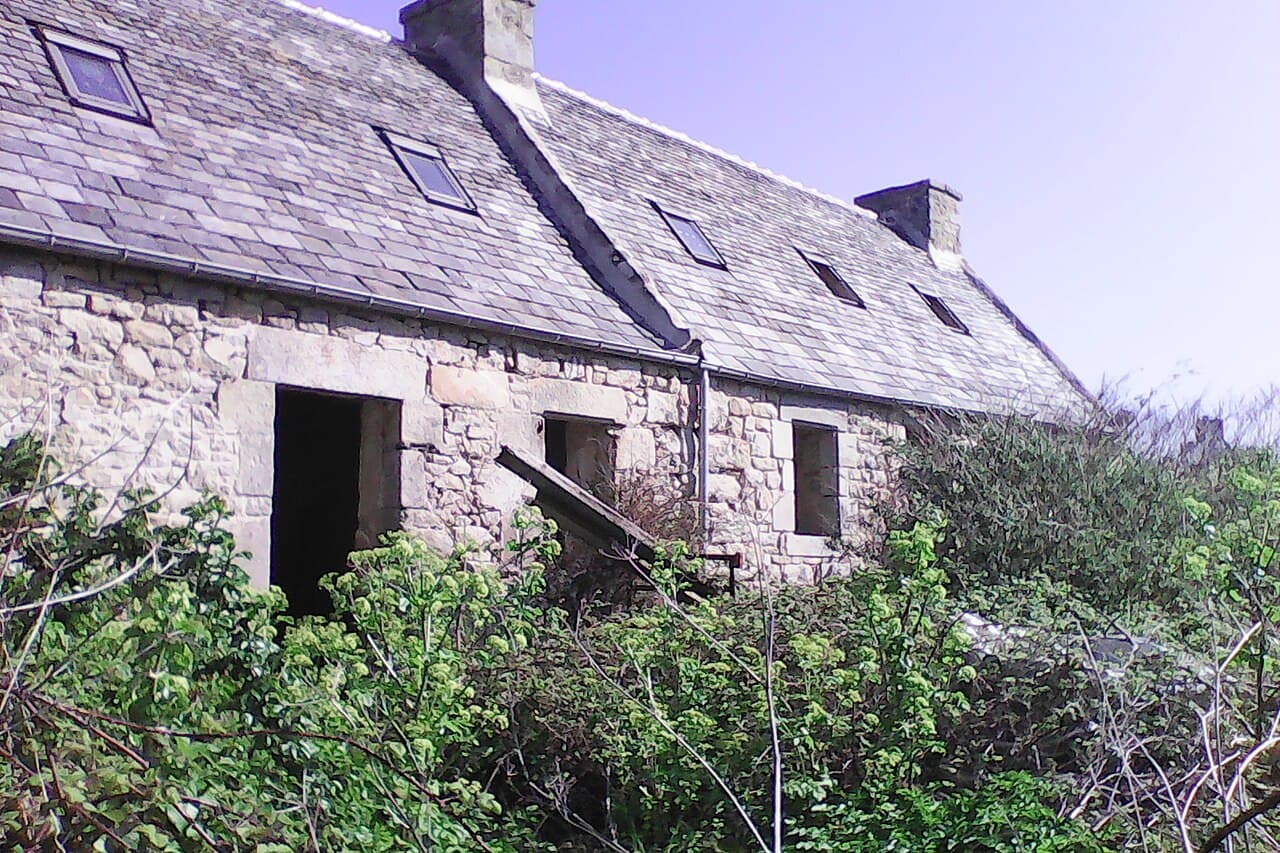
Photo credit: ManoSolo13241324, Île-de-Batz - Maison abandonnée - 2018.jpg / Wikimedia Commons — CC BY-SA 4.0. Archive photograph (Île de Batz, April 2018) illustrating one visible form of long-term vacancy; not all vacant homes are run-down or abandoned.