Price per square metre: the cities still falling and those holding up
The latest indicators paint a very contrasted picture of French property. Rennes and Nice fell in October, while Toulouse rose. To buy or sell, the challenge is to understand what these changes measure and how to relate them to a specific property.

Gaston michelin
Agent immobilier

Talking about “the property price” in the singular is becoming less and less useful for preparing a decision. Markets do not react in the same way to incomes, financing, supply and the characteristics of properties. The figures published in early November 2026 show it: some large cities are still correcting, others are rising, and averages hide gaps between apartments, houses and neighbourhoods. A methodical reading turns these statistics into concrete benchmarks, without applying a national percentage to every home.
October confirms diverging trends
In its 2 November barometer, Meilleurs Agents estimates a monthly fall of 0.1% nationally. Rennes is down 0.8%, Nice 0.5% and Montpellier 0.3%. Conversely, Toulouse is up 0.6%, Lyon and Lille 0.2%. Rural areas gained a further 0.1% over the month and 3.7% over a year. [1]
These measures concern the change in estimated indices. They are a recent snapshot of the market, using the method of their producer. A monthly movement must be interpreted with caution: it may confirm a trend, but it is not enough to predict the coming quarters or to describe each street.
For a seller, the first lesson is the need to update their comparables. An estimate made several months earlier may remain relevant, but it must be tested against competing supply and recent sales. For a buyer, the differences in trajectory are a reason to examine several areas rather than wait for a general fall.
A price per square metre depends first on its definition
The Grand Paris notaries measure, at the end of August 2026, a price of 9,590 euros per square metre for existing Parisian apartments. Their 29 October publication distinguishes recorded prices from projections drawn from preliminary sales agreements. This benchmark is therefore not produced at the same time or by the same method as a listings or valuation indicator. [2]
A median price splits a set of sales into two groups; an average adds up the amounts and divides by the number of observations. A standardised price seeks to limit the influence of changes in the quality of the homes sold. As for the asking price, it represents the seller’s request, which can still be negotiated. [4]
Comparison becomes misleading when these notions are mixed. A large house, a renovated studio and a family apartment do not contribute in the same way to a city’s average level. For each figure, one should therefore note the date, the type of property, the area and the method used.
A single city can already contain several markets
Nantes provides an illustration. On 1 November, Meilleurs Agents estimated the average price of apartments at 3,330 euros per square metre and that of houses at 4,561 euros. These levels are estimates, with significant variations by area and characteristics. They are not guaranteed prices for an individual sale. [3]
The gap is partly explained by the mix of properties and locations. The houses available may be in particular neighbourhoods, have land or offer features that do not match those of the apartment stock. Comparing the two amounts therefore does not automatically tell you the value of a garden or an extra floor.
Within a single building, exposure, noise, the lift and the condition of the common areas can also change buyers’ interest. A municipal average is a starting point. Value is then built from genuinely comparable transactions and from the expenses the future occupant will have to incur.
A price cut does not always improve the purchase budget
Take a deliberately simplified example: a property listed at 300,000 euros falls by 2%, or 6,000 euros. This difference is tangible, but its value must be weighed against the cost of financing, works and charges. An apartment that is cheaper to buy can end up tying up more cash if major expenses appear after signing.
Conversely, a property that is properly renovated and suited to the project can justify an initial effort if future charges and works are better controlled. The trade-off must rest on a full budget, drawn up with the same assumptions for each home. The point is not to treat every high price as justified, but to compare costs that are truly comparable.
Holding period also matters. Acquisition costs, any works and resale expenses weigh more heavily on a short transaction. Before speculating on the next price movement, the buyer does well to check their ability to keep the property for the planned length of their project.
How to build an estimate that helps in negotiation
A serious analysis starts with a few recent sales in the same area, with similar sizes and condition. Competing listings complete the work: they show the choice available to buyers and the positioning of other sellers. Their age and price changes also provide information.
Quantifiable differences must then be isolated. A renovation quote, a co-ownership decision or a documented energy expense is a stronger argument than a general reference to a falling market. The aim is to explain the proposed price with elements the other party can examine.
Finally, the financing and the timetable must be presented clearly. A slightly different offer may be worth more to the seller if the file is solid and the conditions for completion are coherent. Property negotiation concerns an entire transaction, of which the price remains, of course, a central component.
Good reflexes for the coming months
The latest indicators above all confirm the diversity of French markets. They help identify areas to study, without replacing a local analysis. The movements in Rennes, Nice or Toulouse should be followed over time and related to the kind of properties actually being sought.
If you are selling, have your estimate updated using recent evidence and prepare the technical documents. If you are buying, compare the total budget and the quality of use of the homes. LGH Patrimoine helps you link market figures to your address, your property and your project, so as to build a reasoned decision.
Sources
[1] Meilleurs Agents - National and big-city barometer - 2 November 2026; estimated October changes
[2] Notaires du Grand Paris - Market trends, June to August 2026 - 29 October 2026
[3] Meilleurs Agents - Property prices in Nantes - Estimates as at 1 November 2026
[4] Notaires du Grand Paris - Price map methodology - Consulted on 4 November 2026
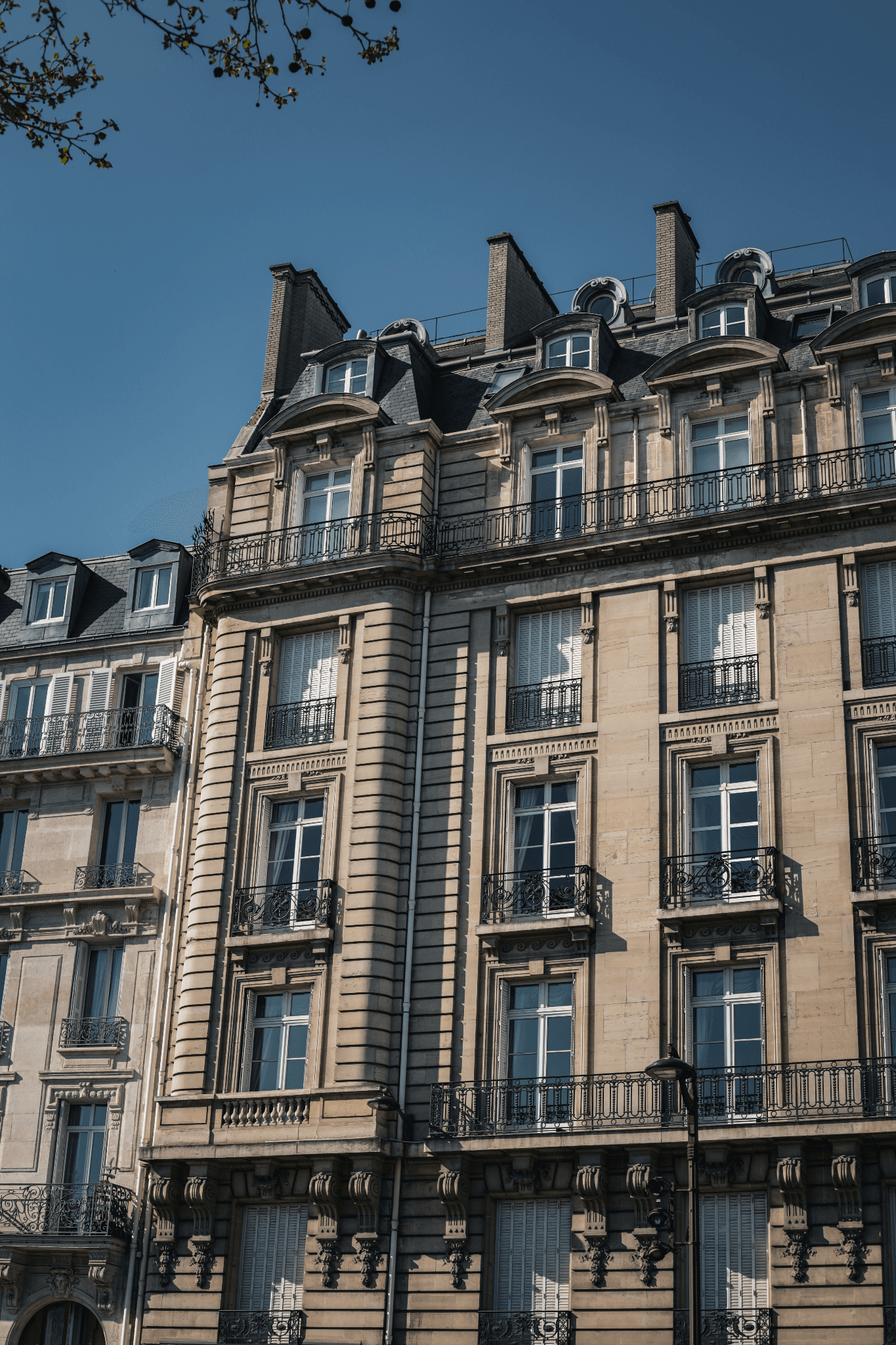
Photo credit: Pymouss, Rennes - quai Saint-Cyr 20210404-05.jpg / Wikimedia Commons — CC BY-SA 4.0. Illustrative photograph (Rennes, 4 April 2021); the price changes come from the article’s data, not from the image; image resized by the source.