Why Energy-Inefficient Properties Are Becoming an Opportunity
For years, properties with poor energy ratings were seen as assets to avoid. Too expensive to heat, difficult to rent, costly to renovate… In the minds of many buyers, so-called “energy sieves” became associated with bad investments. Yet over the past few months, another reality has started to emerge in the market: these overlooked properties may actually become some of the most interesting real estate opportunities of the coming years.

Hadrien Celarie
Co-fondateur
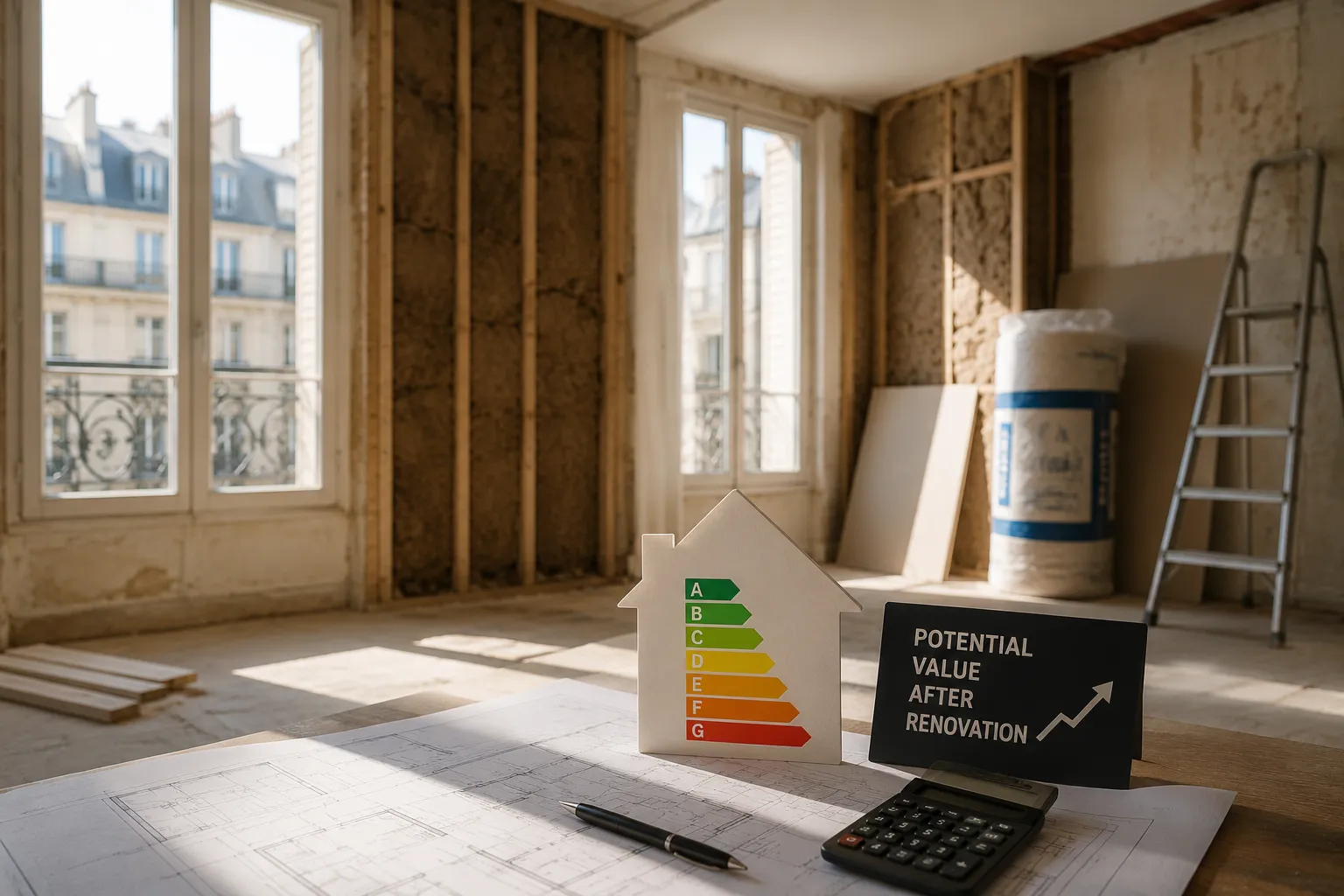
The paradox is striking. As regulations become stricter, more owners are trying to sell quickly. The result is that many apartments are now entering the market at significant discounts, particularly in Paris and major French cities where demand remains strong. Where some see a problem, others are beginning to see untapped value.
In reality, not every F- or G-rated property is a structural disaster. Many simply suffer from outdated insulation, old windows, or inefficient heating systems — issues that can often be improved through well-planned renovations. Once upgraded, the difference in value can become substantial.
The real estate market is gradually moving toward a more selective environment. For years, almost everything sold easily. Today, buyers pay much closer attention to energy performance, renovation costs, future regulations, and overall property quality. This shift is fundamentally changing the way investors approach the market. Opportunity no longer lies only in “turnkey” properties, but increasingly in the ability to identify undervalued assets and reposition them intelligently.
In Paris, this trend is especially visible. Some apartments in excellent locations are now facing heavy negotiations solely because of their energy rating. Yet once renovated, many of these properties quickly recover their attractiveness. In certain cases, the discount obtained at purchase can more than offset the renovation costs, creating strong upside potential for investors with a medium-term vision.
Of course, this does not mean every energy-inefficient property is a good deal. This is precisely where many investors make mistakes. Buying a property simply because it appears “cheap” can quickly become problematic if renovation costs are underestimated, if the building itself has underlying issues, or if the rental demand is weak. More than ever, location remains essential. A poor location combined with poor energy performance rarely becomes a successful investment.
However, for well-advised investors capable of accurately evaluating renovation costs and long-term potential, the current market is creating genuine opportunities. Where the market still sees constraints, others are already creating value.
Ultimately, energy-inefficient properties may reflect something much broader about today’s real estate market. The industry is becoming less automatic, more demanding, and far more strategic. And in this new environment, the best opportunities are not always the most obvious at first glance.