Lebanon: owning a house that is still standing is no longer enough to live in it
Destruction cannot be measured only by the number of collapsed buildings. Utility cuts, rents that are hard to pay and interrupted services reduce the chances of return. The news from Lebanon reveals what gives a home its real value in use.

Gaston michelin
Agent immobilier
A house can be visible, accessible and partly intact, yet remain very hard to live in. Without water, electricity or services nearby, owning the walls no longer guarantees the ability to resume daily life. This is the reality described by United Nations teams in southern Lebanon in October 2026. The situation puts housing at the heart of the crisis: where to live during repairs, how to pay rent and what rebuilding an asset really means when its entire surroundings have been affected.
Returns highlight the limits of the housing available
In a field report published on 9 October, the UN describes in particular the village of Zawtar Al-Gharbiyeh: about 90 families out of 500 had returned, to homes that were still habitable, sometimes partly damaged. Water supply depended on trucks and electricity was lacking. The same report describes obstacles to restoring services in several southern municipalities. [1]
The building is therefore only part of the answer. A family must also be able to get around, access healthcare, send children to school and regain income. When these functions remain interrupted, restoring an apartment is not enough to allow a lasting return. The scale of the neighbourhood and the municipality becomes as important as that of the plot.
This distinction deserves to be kept in any real estate reading of the crisis. A home that is “standing” is not necessarily ready to be occupied. An occupied home does not necessarily meet all of the household’s needs. And a return home may be an endured solution for lack of means to stay elsewhere.
Rents weigh on decisions to return
The UN report stresses that some families also return because rents and displacement costs become too heavy. This observation does not provide a national rent index, but it establishes a concrete constraint: the cost of rehousing can speed up a decision before living conditions are fully restored. [1]
The mechanism is a shift in demand. When part of the stock becomes unusable, households look for a solution in areas where homes remain available. Local supply can then come under greater pressure while families’ incomes have been reduced. The imbalance appears in occupants’ budgets even before it is properly recorded in a market statistic.
For an owner, a higher headline rent does not guarantee a more secure income. Ability to pay, energy costs, stability of occupancy and the ability to maintain the building must be examined together. A rise in prices can thus coexist with a sharp deterioration in access to housing.
The new phase of conflict has interrupted a fragile recovery
In its economic monitor published on 21 August 2026, the World Bank anticipated a 6.4% contraction of the Lebanese economy over the year. This projection followed estimated growth of 4.2% in 2025. The institution linked the reversal to the resumption of conflict, additional damage and disruption to activity, notably tourism. [2]
This is a forecast made at that date, not a final annual result. It nevertheless sheds light on several real estate factors: household incomes, confidence, business activity and the financing of works. The value of a property cannot be isolated from these conditions when deciding on a repair, a letting or a sale.
The World Bank also mentions a banking sector that remains weakened. In such a context, owning an asset does not mean having immediate access to the cash needed to restore it. The ability to pay contractors and to phase the work becomes a concrete condition for bringing a home back into use.
Reconstruction figures must stay dated
An earlier assessment of the 2023-2024 conflict put damage to the housing sector at 4.6 billion dollars, and its recovery and reconstruction needs at 6.3 billion. These amounts are a useful historical benchmark, but they do not quantify the additional destruction of 2026. Adding them to other announcements without checking the scope would lead to a misleading estimate. [3]
The difference between damage and reconstruction needs is just as important. The former describes an assessed material loss; the latter depends on the cost and conditions of restoration. Neither should be confused with a property’s sale price, or with the compensation a household might actually receive.
For readers, this caution avoids turning a humanitarian assessment into a property barometer. In particular, there is no homogeneous set of transactions from which to conclude a general change in prices across all the neighbourhoods concerned. The available data mostly tell us the scale of the difficulties with housing and the restoration of services.
Rebuilding means handling several issues at once
On the physical side, the order of work matters: access, structural safety, weather protection, utility networks, then interior fittings. A visible renovation is of limited use if the building remains exposed to deterioration or cut off from essential connections. Technical surveys and coordination between parties are therefore decisive.
On the ownership side, rights, available documents and relationships between owners, occupants and co-owners must also be clarified. Local rules must be examined by competent professionals. Displacement makes this organisation harder when the parties involved are scattered or supporting documents have been lost.
Finally, projects must be placed in their collective setting. A home can regain its use more quickly if the street, the networks and public facilities are restored together. Property reconstruction thus depends on a capacity for joint action, beyond the sum of private building sites.
A reading of real estate centred on use
The Lebanese case recalls that the value of a home rests on the possibility of living in it. Surface area, the quality of materials and legal ownership are essential, but they take on meaning within a set of services, access and economic relationships.
To understand the consequences of a war for real estate, one must therefore observe usable homes, the cost of rehousing and the conditions of return. This approach makes it possible to measure needs without reducing a human crisis to a pricing opportunity. It also makes visible a universal principle: preserving housing means preserving everything that makes it possible to live in it.
Sources
[1] UN Lebanon - Returns and essential services in the south of the country - 9 October 2026
[2] World Bank - Lebanon Economic Monitor, summer 2026 - 21 August 2026; forecasts at that date
[3] World Bank - Lebanon damage and needs assessment - 2025; scope of the 2023-2024 conflict
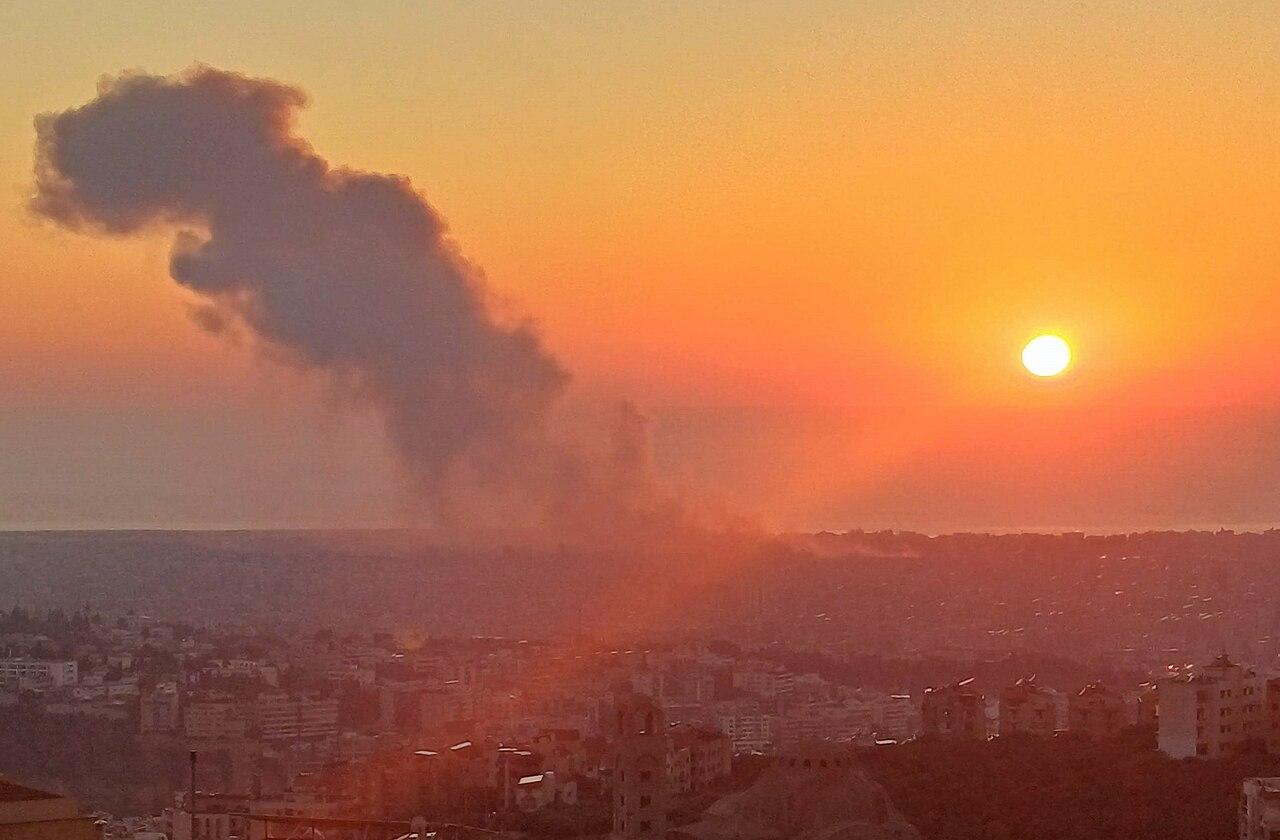
Photo credit: Jimmyp84, Hezbollah Headquarter Airstrike 2024.jpg / Wikimedia Commons — CC0. Archive photograph from 27 September 2024: it does not document a 2026 event or the damage to any particular home.