Dubai facing war: is the real estate haven becoming more fragile?
The regional conflict is testing buyer confidence while new homes come onto the market. The third-quarter 2026 figures call for a careful reading: luxury, off-plan sales and completed properties do not necessarily follow the same path.

Gaston michelin
Agent immobilier
In Dubai, real estate is often presented through images of growth, major projects and international demand. The events of 2026 force us to complete that story. Perceived security, freedom of movement and buyer confidence become as visible as the architecture or the amenities. Even so, a slowdown in signings does not mean that every apartment loses the same value. Understanding the market now means distinguishing between neighbourhoods, categories of buyers and the nature of the properties.
The high end is recording a change of pace
In its analysis published on 21 October, Knight Frank counts 86 residential sales above 10 million dollars in the third quarter, against 131 in the previous quarter. The firm also measures a 5% fall in prices across the ten prime neighbourhoods it tracks between those two quarters. Its regional head identifies the conflict as a significant drag on confidence. [1]
These figures describe a specific segment. They measure neither the change in all Dubai homes nor that of each villa. The quarterly comparison is also sensitive to seasonality. Over the first nine months of 2026, Knight Frank counts 412 sales above 10 million dollars, against 357 over the comparable period of 2025. A recent weakness can therefore coexist with a year-to-date total that is still high. [1]
For an owner, the relevant question becomes more local: how many comparable properties have actually found a buyer, at what price and in what time? An average covering a set of neighbourhoods does not replace that observation. It does indicate, however, that resale expectations should be re-examined with greater care.
War first changes the conditions for decisions
An international buyer does not choose a surface area alone. They are sometimes arranging a family residence, school access, business travel and wealth spread across several countries. When the regional environment becomes more uncertain, these decisions can be postponed even if the targeted home is not physically affected.
Real estate risk then travels along several paths: weaker tourist demand, hesitation to tie up capital, travel difficulties or a demand for better compensation for risk. These mechanisms form an analytical framework; they do not allow every observed fall to be attributed to the conflict alone. Changes in supply and the price level reached beforehand must be examined in parallel.
This is also the limit of the expression “safe haven”. A market can enjoy a protective reputation for a period and become more vulnerable when the context changes. The strength of an investment rests on verifiable conditions: real demand, financing, the quality of the property and the ability to hold it if resale takes longer.
Other studies describe a more selective market
Savills reports around 34,500 residential transactions in the third quarter, down 4% on the quarter. The firm stresses the role of the launch calendar and of the mix of sales. It observes relative price stability on a like-for-like basis, despite a softening of aggregate indicators. [2]
This reading qualifies what a single spectacular figure might suggest. If more lower-priced homes are sold, an average price can fall without each residence losing as much value. Conversely, a stable average can hide difficulties in a particular scheme or area. Volume, price and the quality of the properties sold must therefore be read together.
In its third-quarter publication, CBRE also describes a normalisation of Dubai’s residential market, while other segments and other emirates show different dynamics. This finding reinforces the value of an analysis by use: living in a home, letting it year-round, operating it short-term or reselling an off-plan property correspond to distinct exposures. [3]
Off-plan sales call for a specific reading
Buying a home that is already delivered lets you visit it, observe the building and compare actual rents. An off-plan purchase also involves a developer, a schedule, stage payments and a future delivery. The announced price therefore does not sum up the economic commitment. The conditions for assigning the contract and the protections that apply must be checked locally.
The coming supply deserves particular attention. Savills refers to more than 525,000 homes planned between 2027 and 2030. This volume remains a forecast timetable: not all projects will necessarily be delivered at the same time. It is nevertheless enough to raise a decisive question for each scheme: what competition could appear when the owner wants to let or sell? [2]
A yield shown in a brochure must be recalculated after service charges, fees, void periods and refurbishment costs. For a household whose income and main expenses are in euros, currency flows add another variable. These items must be built into the budget before comparing the deal with a property held in France.
An example for reasoning without relying on a quick resale
Take a teaching hypothesis: a home bought for 500,000 euros, with 20,000 euros of annual rental income actually retained before personal tax, yields 4% on the purchase price alone. If acquisition costs and initial expenses bring the investment to 540,000 euros, the same income represents about 3.7%. A brochure and a full budget can thus tell two different stories.
If the owner then has to accept 10% less than the purchase price to exit quickly, several years of income can be absorbed. This simulation is neither a forecast for Dubai nor a discount to apply to properties. It is a reminder that the ability to hold for a long time matters as much as the hoped-for annual yield.
What this episode teaches every property investor
The Dubai market remains active, but recent data justify a more demanding selection and a better distinction between asking price, signed price and sales volume. Luxury figures, like-for-like observations and construction timetables provide complementary information.
For a French investor, the right comparison concerns yield after expenses, liquidity and the risks actually borne. International real estate can be understood from these common criteria, then from local specifics. A prestigious address and a growth story are always better accompanied by a costed, documented file reviewed by professionals in the country.
Sources
[1] Knight Frank - Market for homes above 10 million dollars - 21 October 2026
[2] Savills - Dubai Residential Market Report, Q3 2026 - 12 October 2026
[3] CBRE - UAE Real Estate Market Review, Q3 2026 - 3 November 2026
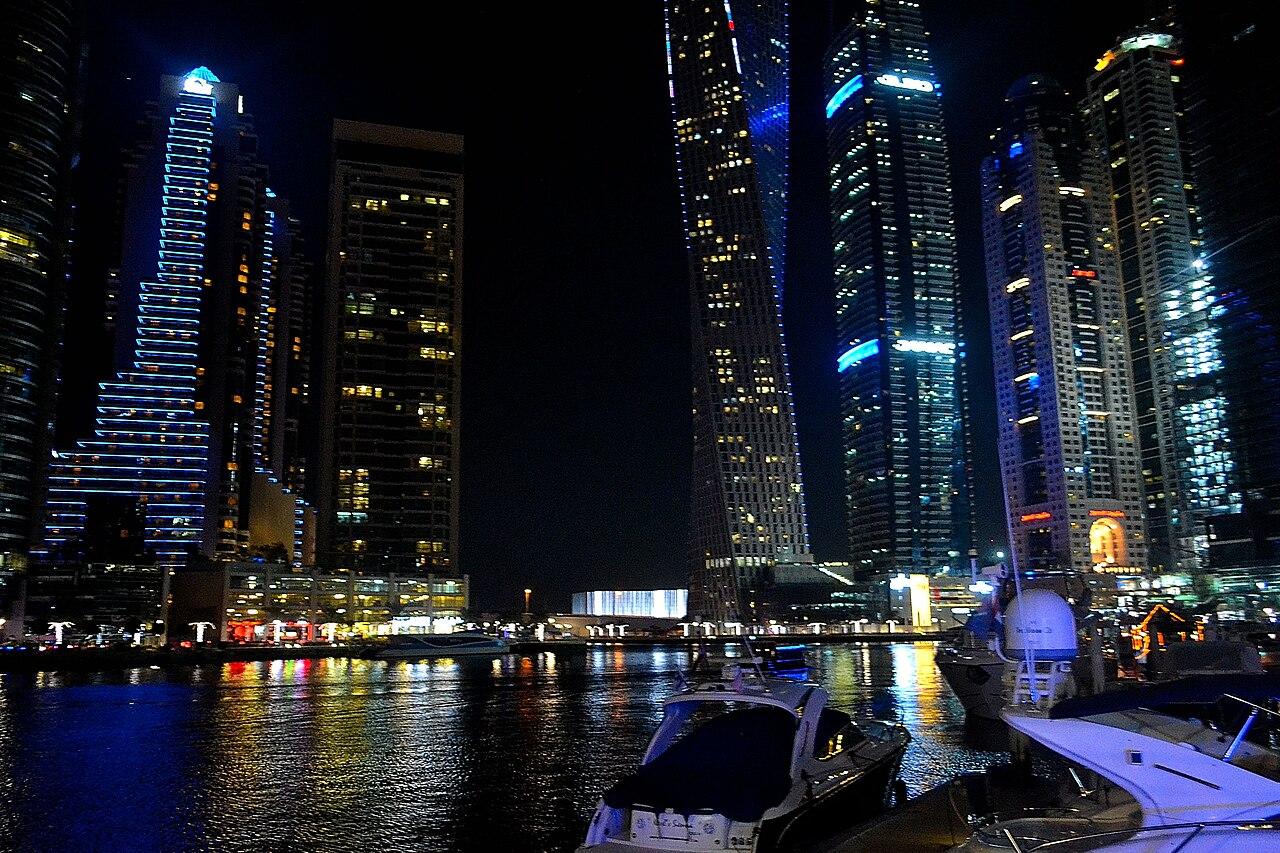
Photo credit: Khanshahab06, Dubai Marina Skyline 93.jpg / Wikimedia Commons — CC BY-SA 4.0. Illustrative photograph of the Dubai Marina district, unrelated to the conflict discussed in this article.