Coastal property: what is a sea view worth when the shoreline retreats?
The appeal of the seaside meets a long-term wealth constraint: erosion. Maps, planning documents and the holding period become essential parts of the purchase file. A property in demand today may call for a very different analysis when it comes to being passed on.

Gaston michelin
Agent immobilier
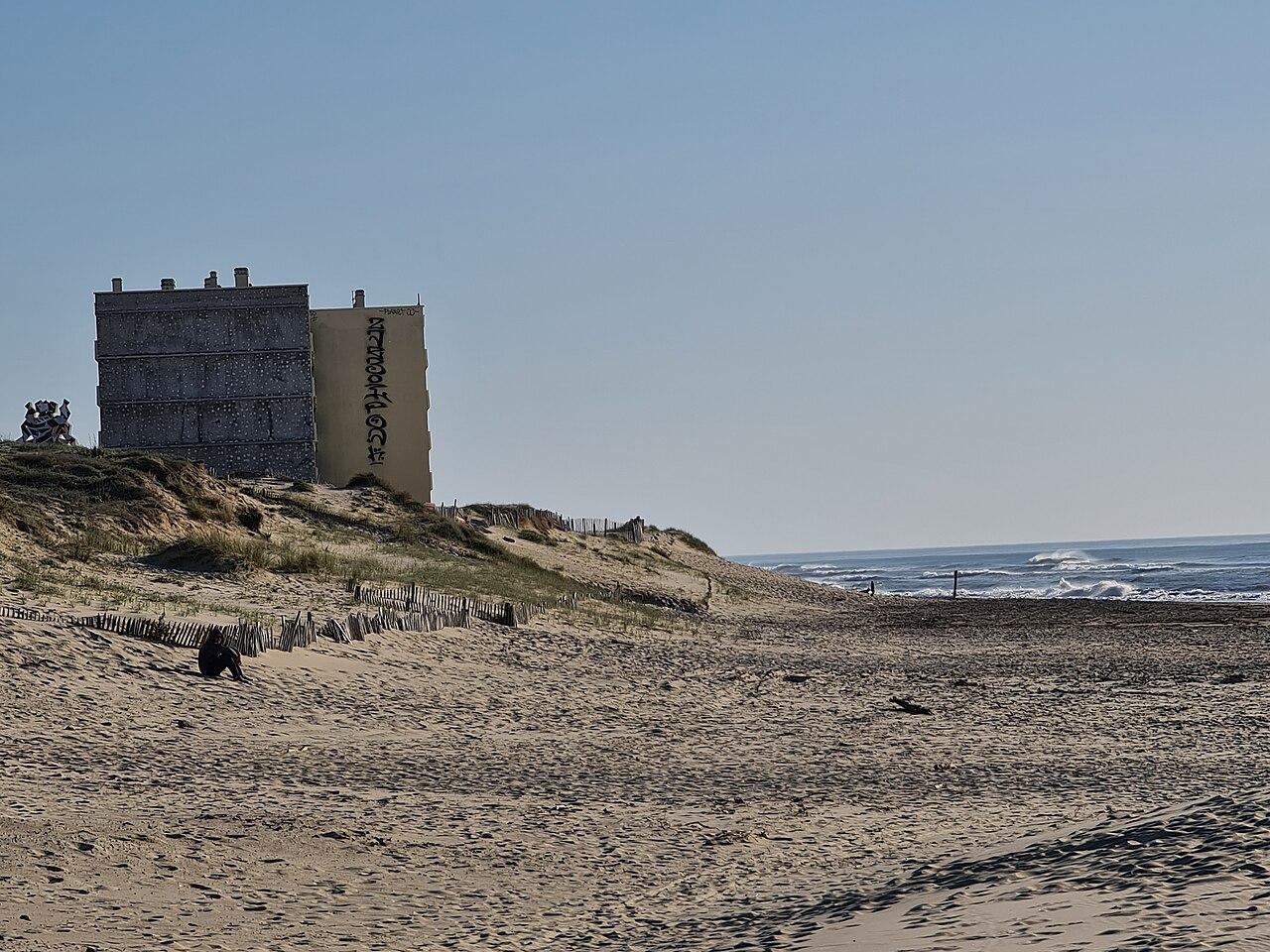
Proximity to the sea remains a powerful search criterion. It promises a view, family use and sometimes attractive rental demand. But it also means a moving environment: a beach recedes, a cliff changes, a dune shifts. For an owner, the question becomes one of wealth when they want to keep, finance or pass on a home over several decades. The challenge is to examine the possible length of use and local rules with as much attention as the view from the living room.
A known risk, new tools in 2026
In its 2024 assessment, recalled by public releases in 2026, Cerema estimates that around 5,200 homes could be affected by coastal retreat by 2050. The figure also covers commercial premises. It describes an exposure scenario at a given horizon; it is not the number of homes already lost. [1]
The framework for action continues to evolve. A decree of 20 August 2026 adopted the national strategy for integrated management of the coastline. The local authorities concerned also have tools to document the shoreline’s evolution and organise their area’s adaptation. [2]
For a buyer, this news has a practical consequence: the information available should not be assumed to be the same as at a previous sale. A municipality may have started mapping, changed its planning rules or refined its strategy. The file must be updated to the date of the project.
Erosion and submersion do not describe the same phenomenon
Coastal retreat is the movement of the boundary between land and sea inland. Submersion refers to temporary flooding by the sea. The two phenomena can affect the same area, but they raise different questions for the use and preservation of a building.
Protection against water during a storm does not necessarily answer the gradual loss of land. Conversely, a house set back from a retreating cliff may face another exposure linked to its low elevation. The phenomenon actually at issue must therefore be identified before works and insurance are discussed.
The public application “Le littoral de ma commune”, presented by Service Public in 2026, makes a first reading easier: the shoreline’s historical change, aerial photographs and territorial information. It is a tool for understanding, to be supplemented by enforceable documents and opinions suited to the plot. [1]
The thirty- and one-hundred-year horizons change the reasoning
In the municipalities covered by the scheme, the planning code provides for the delimitation of zones exposed over a thirty-year horizon and between thirty and one hundred years. The consequences of being classified must be examined with the municipality and the project’s professionals. A national map does not replace this local document. [3]
These horizons invite the property to be set against its intended use. A purchase for a few years, a family residence kept for thirty years and an asset meant for several generations do not involve the same length of time. The timetable of the risk then enters into the choice of financing, works and transfer.
A date should also not be read too literally. A mapped horizon is not a prediction of the day a building will be affected. Studies express knowledge and assumptions, which may be revised. Their purpose is to help decide with uncertainty made explicit.
The price must reflect the uses that can realistically be envisaged
A home can keep strong demand while being exposed in the long term. Value does not disappear automatically when the risk is identified. It depends in particular on the horizon, the constraints and the concrete possibilities for occupation or conversion.
Even so, a price based only on non-comparable coastal properties can be misleading. Sales in areas with similar conditions must be compared. Amenities and the view play a part, but so do the status of the land, the possibilities for works and the expenses to be expected.
No universal percentage discount emerges from the sources used here. The approach is to document the property and its constraints, then observe comparable transactions. Seller and buyer thus have elements with which to discuss a value rather than argue over a general impression.
Five checks to organise before signing
The first concerns the exact location of the building and its outbuildings: a plot boundary is not enough to describe the position of the house, the garden and the access. The second concerns the planning document and local exposure maps, to be requested in their version in force.
The third looks at the history of the site: protection works, changes in access, collective interventions and available studies. The fourth concerns insurance, whose guarantees must be examined phenomenon by phenomenon. It is useful to ask explicitly how the contract treats the damage envisaged and any exclusions.
The fifth is to build the timetable into the budget: financing, upkeep, works and holding period. For properties subject to the information obligation, the risk statement must be provided at the first viewing, if one takes place, and then attached to the sale documents according to the applicable rules. [4]
Passing the property on deserves particular attention
A family residence is often projected over a longer period than the one used in a rental simulation. Heirs may receive a property with different possibilities of use from those imagined at purchase. Preparing this discussion avoids reducing the transfer to a value entered today.
Some legal tools also organise temporary occupation. The real lease for adaptation to coastal erosion may be concluded with a public lessor for a term of twelve to ninety-nine years, under the conditions provided, with an early termination mechanism linked to safety. This logic shows the growing importance of time in coastal property law. [5]
Buying by the sea with a complete file
The coast remains a market of very varied uses and addresses. A sound decision combines the appeal of the place, knowledge of the ground and the length of time actually envisaged. The quality of the file counts as much as the photograph in the listing.
Before setting a price or committing, have the local documents, the technical studies and your wealth project brought together. This analysis preserves the interest of a seaside purchase while giving explicit weight to the evolution of the shoreline and to the owner’s future responsibilities.
Sources
[1] Service Public - Coastal erosion and the Le littoral de ma commune application - 2026; Cerema estimates from 2024
[2] Légifrance - National coastline management strategy - Decree of 20 August 2026
[3] Planning code - Provisions on coastal territories - Articles L121-22-1 et seq.; text consulted on 4 November 2026
[4] Service Public - Property survey: risk statement - Consulted on 4 November 2026
[5] Vie publique - Ordinance of 6 April 2022 on the sustainable development of coastal areas exposed to coastline retreat - Ordinance No. 2022-489 of 6 April 2022, published on 7 April 2022
Photo credit: Anthony Baratier, Le Signal, Soulac (2021).jpg / Wikimedia Commons — CC BY-SA 4.0. Archive photograph from 28 March 2021: it shows the state of the site on that date, not a current view; image resized by the source.