Portugal surging, France retreating: why European property is splitting apart
In the second quarter of 2026, prices rose 16.5% year on year in Portugal, while they fell 0.8% in France. This divergence is a reason to examine supply, incomes and local conditions before comparing two European investments.

Gaston michelin
Agent immobilier
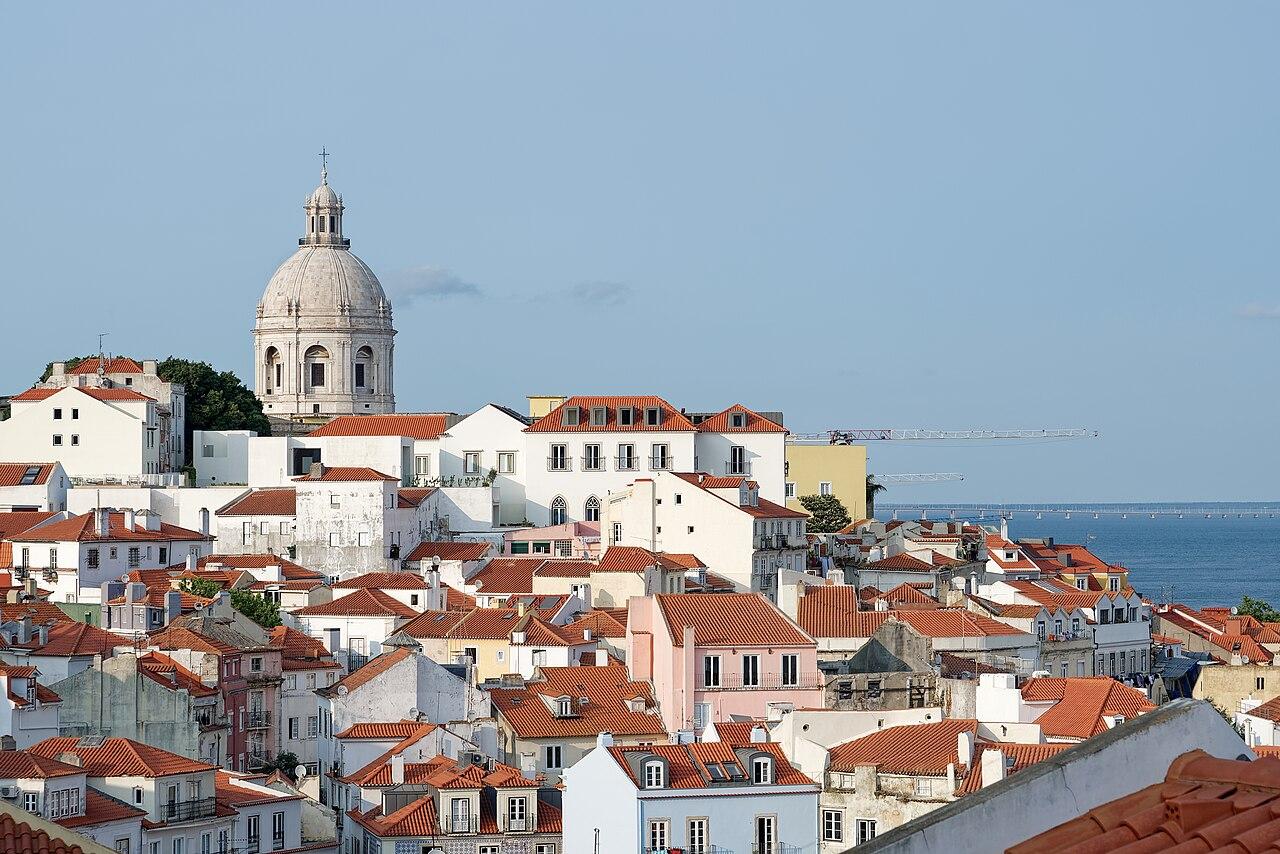
Sharing a currency and a European economic environment does not mean sharing the same property market. In autumn 2026, Portugal and France offer a particularly clear illustration of this diversity. On one side, Portuguese prices still rising strongly; on the other, a more hesitant French market. For a French buyer considering a purchase in Lisbon, Porto or elsewhere, this difference can be attractive. Above all, it should lead to an understanding of what is supporting prices and what this rise means for the use of the home and its yield.
Eurostat highlights a marked divergence
The 1 October release puts the annual rise in prices at 16.5% in Portugal in the second quarter of 2026. Over the same period, France fell 0.8%. Across the European Union, the increase reached 4.7%. Finland and Luxembourg are also among the countries where prices are falling. [1]
These figures correspond to price indices that are comparable within the European statistical framework. They measure a change, not how expensive a home is. A market rising faster may remain cheaper in some segments; a lower price can also represent a much greater effort for local households.
The period must also be respected. This is the second quarter, compared with the same quarter of 2025, and not a rise observed in October alone. An acceleration, a slowdown and a fall describe different movements. The Portuguese increase remains strong, without that allowing it to be mechanically extended into the following years.
Price levels also reveal internal gaps
In a 23 October release, the Portuguese statistics institute reports a median price of 2,445 euros per square metre for family dwellings sold in the second quarter. Lisbon reaches 5,299 euros, Cascais 5,200 euros and Oeiras 4,704 euros. These amounts come from sales, with their own geographical scope and composition. [2]
They should not be confused with asking prices in listings or with valuations carried out for banks. Nor is the national level an estimate for a Lisbon apartment. The condition of the building, its location and the type of property can produce significant gaps within a single municipality.
To compare with France, one must therefore look for equivalent properties and uses. A tourist residence on the Portuguese coast, a family apartment in Lisbon and a rental home in a French city do not expose their owner to the same costs or the same demand.
Supply remains at the heart of Portuguese tensions
In its 2026 work, the European Commission describes a supply that responds gradually to demand, with constraints on labour, land and procedures. Its sector fact sheet published on 2 November also highlights the growth of residential construction and persistent difficulties in accessing housing, particularly in the most sought-after areas. [3]
The mechanism is a classic one: an increase in the number of households wishing to live in an area can quickly translate into extra applications, while new construction takes several years. Even when permits rise, the market must wait for homes actually delivered and suited to budgets.
In its 2026 review, the IMF also stresses the coexistence of insufficient supply in the areas in demand and a large stock that is not used as a main residence. This situation shows that a large number of homes nationally does not guarantee their availability in the right place, at the right price and at the right time. [4]
Rising prices do not benefit everyone in the same way
An owner-occupier may see the estimated value of their home rise. But if they want to buy a larger one in the same area, the property they are looking for may have risen too. The apparent gain in wealth therefore does not automatically turn into extra real estate purchasing power.
For new entrants, the gap between prices and incomes becomes decisive. A market supported by several categories of demand can become hard to access for households whose resources are growing much more slowly. The analysis must relate the price of housing to local income and to the rental supply available.
The investor, for their part, must distinguish between rising value and income. A rapid rise in the purchase price can reduce the yield if rents do not move at the same pace. Betting on a dearer resale does not replace a balanced holding budget.
How to compare a purchase in Portugal and in France
The first step is to define the objective: main residence, occasional family use, long-term letting or a tourist project. This choice determines the location, the expenses and the rules to check. A home that is attractive for holidays does not necessarily meet the criteria of a year-round tenant.
A full budget must then be drawn up in each country: signed price, acquisition taxes, fees, charges, maintenance, management and void periods. Local co-ownership rules and rules on use of the property must be examined with competent professionals. A tourist-letting assumption deserves a separate administrative check in particular.
A teaching simulation illustrates the point. An annual income of 12,000 euros represents 4% of a purchase at 300,000 euros, before fees and expenses not yet deducted. If the price climbs to 350,000 euros with identical income, that rate falls to about 3.4%. Market growth can thus make entry more expensive without improving income.
The European divergence calls for a methodical choice
The 2026 data establish a sharp difference between the French and Portuguese paths. They are neither a promise of capital gain in Portugal nor a sufficient argument to abandon France. Housing availability, prices, financing and demand must be studied at the real scale of the transaction.
To decide, compare equivalent properties, full budgets and several holding scenarios. An investment is also judged by its ability to stay affordable when the pace of increase slows. The value of a European view is precisely to widen comparisons while keeping a rigorous analysis of each address.
Sources
[1] Eurostat - House prices in the second quarter of 2026 - 1 October 2026
[2] INE Portugal - Local sales price statistics - Release of 23 October 2026, relayed on Webinq
[3] European Commission - Portugal, construction and housing - 2 November 2026
[4] IMF - Portugal, 2026 consultation, housing annex - 2026
Photo credit: Jakub Hałun, View from Miradouro de Santa Luzia, Lisbon, 20250603 2016 9045.jpg / Wikimedia Commons — CC BY 4.0. The photo illustrates Lisbon; the article’s figures cover a wider national scope; image resized by the source.